

 LinkedIn
One marketer. Thirty days. Forty hours. If you spend that time auditing every AI answer in your category, you will have a handsome spreadsheet and no pages worth citing.
I used to tell clients to start with a full visibility audit. I was wrong for a one-person team on a 30-day clock. Pick the 15 buyer questions closest to a sale, see whom ChatGPT and Perplexity cite today, then fix the pages that leave you out. Prioritize them the way you would prioritize search terms: by money, not volume. Here is the order, what each step costs, and what gets cut.
1. Week 1: spend eight hours choosing the 15 prompts
Cost: 8 hours. Buys: a baseline you can check again on day 30.
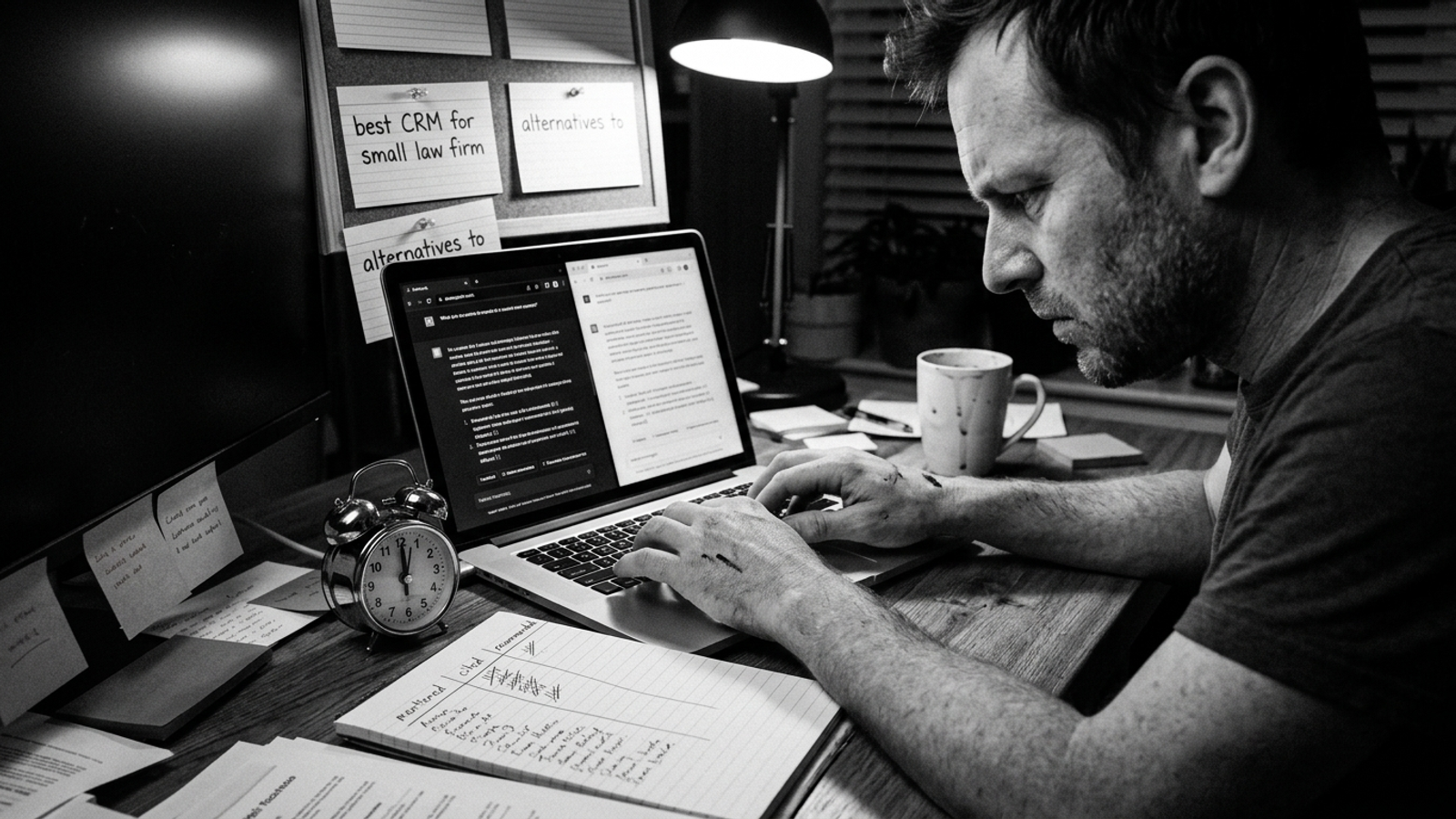
Open a sheet and write 15 questions a buyer might ask right before spending money. Think best [category] for [use case], [your category] vs [competitor], alternatives to [incumbent], and how much does [service] cost for [situation]. Do not fill the sheet with broad questions just because they sound important. A question about what your category means is not the same as a question about which provider to buy from.
I run 30 to 50 buyer prompts in a full audit. That is the wrong starting point here. Fifteen gives you a set small enough to inspect, act on, and rerun without turning the month into a research project. If you cannot explain why a prompt belongs on the sheet in terms of a possible purchase, replace it before you test anything.
Run each prompt once in ChatGPT and once in Perplexity. Use the same wording and a logged-out session if you can. For each answer, record:
- Whether the answer was grounded in search results.
- The first two or three domains it cited.
- Whether your brand was absent, mentioned, cited as a source, or recommended.
Keep the engines in separate columns. Perplexity shows roughly 21 sources per answer where ChatGPT shows around eight, with only about 11% domain overlap. One engine’s answer is not a stand-in for the other’s. If you need a closer look before allocating your first hours, read ChatGPT vs Perplexity vs Google AI Overviews: Where to Earn Citations First.
Give yourself four hours on day 1 and four on day 2. Save the wording and the answers, not just your scores. You will need to see which sources occupied the space you want. Then stop researching. The sheet is a work order, not the opening chapter of an audit.
2. Week 2: spend eight hours finding the gaps you can fix
Cost: 8 hours. Buys: a priority list of five pages to rebuild and three to create.
Sort your 15 prompts by proximity to a purchase, then look at the misses. Give yourself four hours to classify them and four to inspect the pages and third-party sources cited instead of you. Every miss goes into one of three buckets:
- You have no page that answers it. The buyer asks about cost, comparison, or best fit. Your site offers a features page and a pricing page that never quite answer the question. Put a new page on the list.
- You have a page, but the answer is buried. It sits in paragraph nine, below a hero video, behind an introduction written for Google circa 2019. Put that page on the rewrite list.
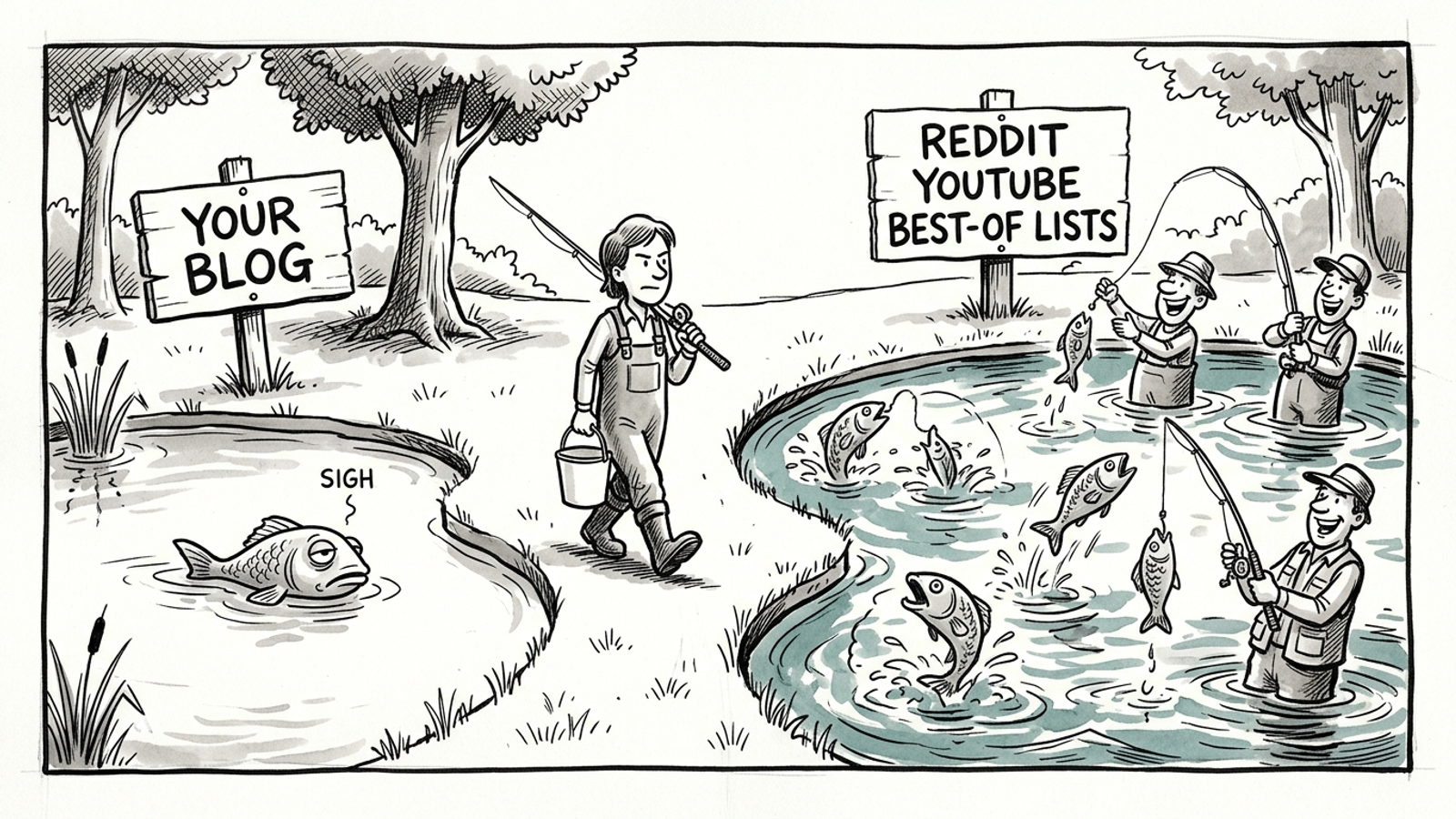
- The cited answer lives somewhere else. The sources are a Reddit thread, a YouTube review, a LinkedIn post, or somebody else’s comparison page. Record the exact source. Another post on your own blog will not, by itself, put you into that conversation.
The third bucket matters particularly for Perplexity. Almost half of its top-10 citations come from Reddit, versus about 11% for ChatGPT, and one in five total Perplexity citations is Reddit. Do not turn that into a mandate to post on every forum. Follow the sources attached to your money prompts.
Choose five existing pages worth rebuilding and three missing answers worth publishing. A prompt can expose more than one problem, and you will not clear every miss this month. Where several prompts point to the same page, that page earns its place on the list. Where a source appears against several prompts, save it for Week 4. Eight pages are a decision, not a claim that every gap is solved.
3. Week 3: spend 12 hours making eight pages quotable
Cost: 12 hours. Buys: five rebuilt pages and three new answers to priority buyer questions.
You do not need more content for its own sake. You need pages that answer the questions on your sheet. Give each of the five rewrites 90 minutes. That uses seven and a half hours; reserve roughly four hours for the three short new pages and the remaining time for a final pass. Keep the scope that tight. This is not the week to redesign a content hub.
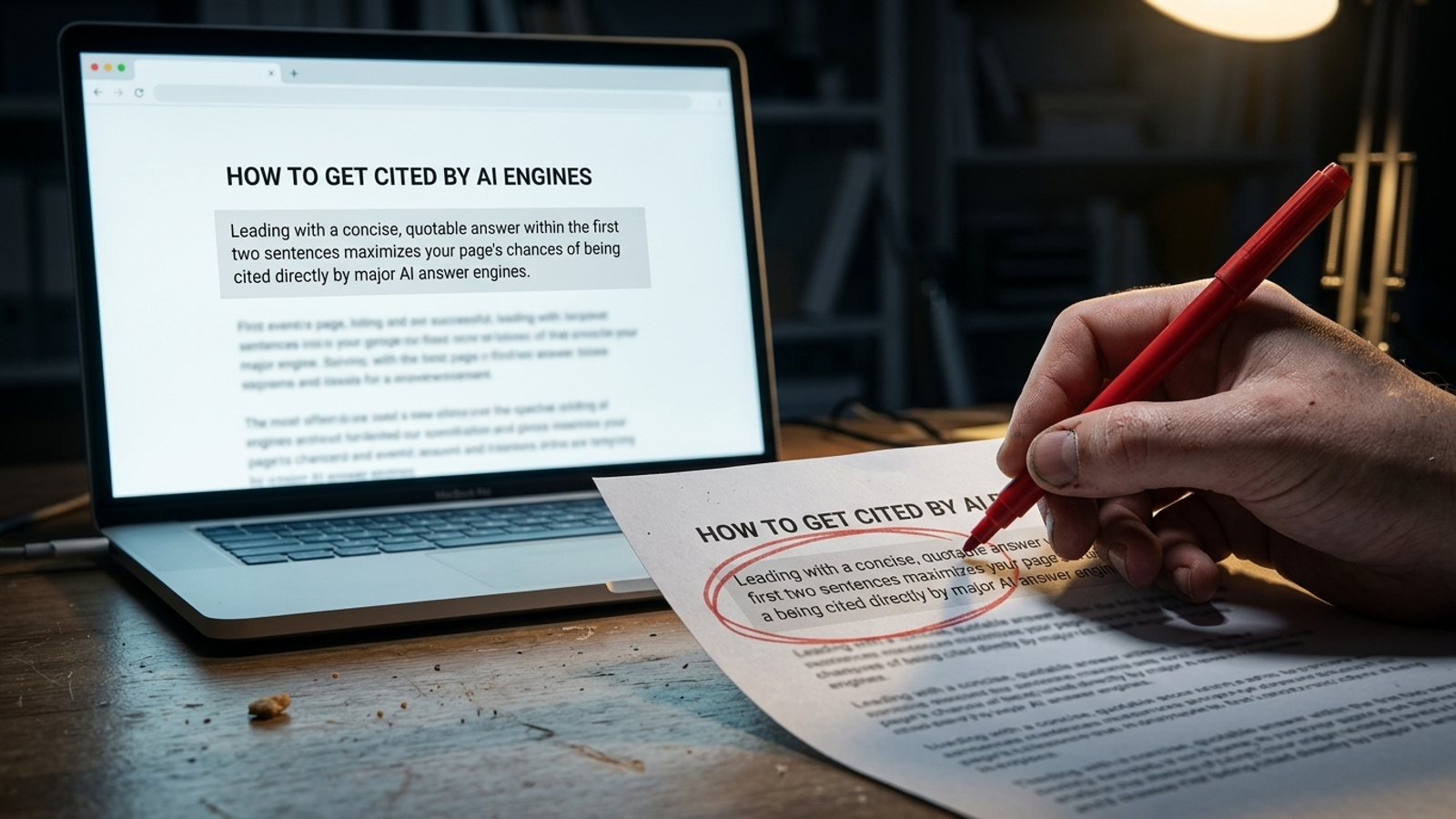
For each page, put the answer where a reader can use it. Rewrite the relevant section so its first 40 to 60 words deliver the answer, with the first sentence able to stand alone. Then check that the rest of the page supports what that opening says. A clean first sentence attached to a vague page is still a vague page.
One reordering case study reported a featured-snippet rate moving from 8% to 24% in five months and a 140% lift in ChatGPT citations without adding topics. I would not bank a 30-day plan on repeating those results. The useful mechanism is simpler: an answer near the top of a relevant page is easier to extract than one buried after nine paragraphs of windup.
Add a short answer capsule immediately after the relevant H2 or H3. In one analysis of cited posts, 72.4% had a 20- to 25-word capsule there, 52.2% had proprietary data, and 44% of citations came from the first 30% of the page. State the entity plainly. Keep links out of the capsule itself. If you have a number that genuinely answers the buyer’s question, use it; do not manufacture one to make the paragraph look more quotable. For the fuller method, see How to Get Cited in AI Overviews and ChatGPT: A Passage-First Guide.
Short does not mean thin. Pages over 20,000 characters averaged 10.18 citations versus 2.39 for pages under 500 characters in the cited analysis. That is not permission to pad three new pages to 20,000 characters each. Answer the question first, then include the detail a buyer needs to judge the answer. If the page cannot help someone decide, an answer capsule will not rescue it.
4. Week 4: spend nine hours where citations already happen
Cost: 9 hours. Buys: targeted off-site work, with three hours kept for the day-30 check.
Look back at the sources you saved in Week 2. Perplexity does not cite you more simply because you published more. Of citations to its 10 most-cited sites, Reddit takes 46.7%, YouTube 13.9%, and LinkedIn 5.3%. On commercial prompts, ChatGPT also draws heavily on lists: 43.8% of 26,283 analyzed source URLs were Best X listicles, while a separate study of 75,000 AI answers found listicles captured 40% of commercial-intent citations.
That gives you a narrower job than ‘build authority.’ Getting considered for an existing best-of list is a better use of this sprint than publishing your own list nobody has reason to cite. A useful answer in a Reddit thread already appearing against a priority prompt is a better bet than another post that never touches the buyer’s question. You cannot control whether an editor adds you or whether an engine cites a thread. You can control whether your contribution deserves to be there.
Make three moves, three hours each:
- Contribute to relevant threads and videos. Start with the sources on your sheet. Give a useful answer with a number where you have one and a limitation where it matters. No pitch paragraph.
- Pitch five existing listicle owners. Send a 60-word block they can actually use: your price, who you fit, and who should skip you. Do not ask them to reconstruct that information from your home page.
- Publish supporting LinkedIn breakdowns. Address the priority money prompts you have worked on, then link the relevant breakdowns from the pages you rebuilt in Week 3.
Timebox the work. The moment you start collecting unrelated forums or drafting an elaborate ‘thought leadership’ calendar, you are spending day-30 measurement time on promotion you cannot tie to the sheet. Follow the cited source, not the fashionable channel.
5. Day 30: spend the last three hours checking what moved
Cost: 3 hours, already reserved from Week 4. Buys: an honest result.
Stop outreach on day 27. In fresh sessions, rerun the same 15 prompts, with the same wording, in ChatGPT and Perplexity. Score each answer as not mentioned, mentioned, cited, or recommended, using your Week 1 notes as the comparison. Keep appearances and citations separate. A mention is not the same as a citation or a recommendation: an answer can name your brand without linking to it, or cite your page without recommending you.
For each engine, calculate two rates:
- Citation rate: prompts where your brand is cited as a source ÷ 15 × 100.
- Appearance rate: prompts where your brand appears at all ÷ 15 × 100.
Do not combine the engines into one flattering number. A Reddit answer might change your Perplexity results while ChatGPT stays put. Save the new answers beside the old ones so you can see whether the pages or outside sources you worked on now appear. A change after your edit is worth investigating; it is not proof that your edit caused it.
A practical 30-day win is two to four prompts moving up a level. Two new citations while most prompts stay where they were is still a result worth logging, not a reason to claim pipeline. Visibility can shift in weeks one to four, branded search lift may follow in weeks four to eight, and pipeline can take months three to six. Day 30 is for checking visibility, not declaring revenue.
If nothing moved, use the three buckets. Did you choose questions too far from a purchase? Are the answers still buried? Are the cited third-party sources still places where you are absent? Pick the failed bucket for the next cycle instead of rewriting the entire plan. Your log should tell you what to do next, not merely whether you feel encouraged.
6. Keep the cuts; expand only when the constraint lifts
Cost: 0 additional hours. Buys: a plan that stays inside 40.
Here is what I cut on purpose:
- The full audit across 50 prompts and eight engines. Fifteen purchase-adjacent questions are enough to direct this sprint.
- Schema tweaks and technical crawls beyond checking that a page renders. Neither replaces an answer the buyer can read.
- Daily re-tracking. Answers wobble; the saved baseline and day-30 rerun give this month a cleaner comparison.
- Video production and podcast pitches. Those are projects, not spare-hour additions to this one.
- Awareness prompts such as what is [category]. They can wait behind questions nearer a purchase.

The ledger is eight hours to choose and test prompts, eight to sort gaps, 12 to work on eight pages, nine for targeted off-site work, and three to measure. If a task cannot earn its place in that ledger, it waits until day 31. That rule is less exciting than an all-channel AI visibility strategy. It also leaves you time to change an actual page.
When the constraint lifts, hand off continuous execution rather than buying another one-off audit. One person can work 15 prompts for 30 days. The same person cannot keep up weekly checks across 100 prompts and multiple engines while rewriting pages and pursuing third-party mentions. That ongoing search work is where groas fits: specialized models handle continuous execution, while a named human strategist owns direction and accountability. For the operating-model comparison, read DIY Checks vs. Visibility Trackers vs. Done-for-You AEO.
My rule for the next decision is blunt. If two prompts moved, run the focused playbook once more yourself. If none moved, examine the failed bucket before buying more activity. If you need coverage beyond 15 prompts, stop pretending it fits a solo sprint and get continuous execution. Keep the sheet, keep the eight pages, and expand outward from what moved.